
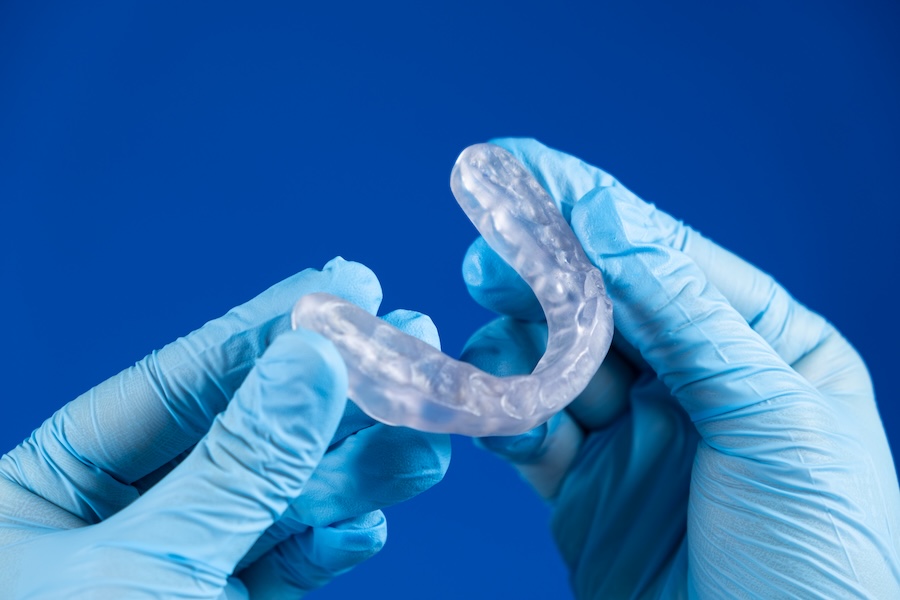
Nightguard Care and Replacement: How to Keep It Clean, Comfortable, and Effective
July 18, 2026 9:00 amA nightguard spends several hours pressed against the teeth, then usually gets rinsed, dropped into a case, and forgotten until bedtime. That routine is easy, but it can also leave behind plaque, odor, cloudiness, and a fit that slowly changes. A little regular care keeps the guard more comfortable and helps it continue doing the job it was made for.
Nightguards are commonly used to protect teeth from clenching and grinding. They may also help reduce wear on crowns, fillings, and natural enamel when heavy pressure happens during sleep. Even so, the appliance needs to stay clean, intact, and properly fitted to remain useful.
At Magnolia Dental in Mabank, TX, Dr. Gerard Macy, Dr. Odelia Kim, Dr. Tanner Anglin, and Dr. Ana Taboada can check your custom nightguard during routine visits. We can help with cleaning questions, rough edges, bite changes, and signs that the appliance is wearing out. Bring it with you to appointments so we can look at the guard and your teeth together.
Rinse the Nightguard as Soon as You Remove It
Rinsing the nightguard in the morning removes saliva and loose debris before they dry onto the surface. Cool or lukewarm water works well for this step. Hot water should stay out of the routine because heat can distort the material.
Once buildup dries, it becomes much harder to remove. A quick rinse now saves more scrubbing later and helps keep the appliance from developing a stale smell. It also gives you a chance to notice cracks, rough spots, or changes in shape.
After rinsing, gently shake off the extra water and set the guard somewhere clean to air-dry. Do not immediately seal a wet appliance inside a closed case. A damp, dark container is not exactly the fresh start you want waiting at bedtime.
Brush It Gently, Not Aggressively
A soft toothbrush can remove the thin film that collects on the nightguard. Use light pressure and clean the inside, outside, and chewing surfaces. A separate toothbrush for the appliance can be helpful so the bristles stay free of toothpaste residue.
Regular toothpaste is often too abrasive for nightguard material. Over time, it may leave small scratches that make the surface look cloudy and give plaque more places to collect. Mild liquid soap or a cleaner recommended by the office is usually a better choice.
Rinse the guard thoroughly after cleaning so no soap remains. Strong flavors and leftover cleanser are not pleasant when the appliance goes back into the mouth. If the guard still feels slick or tastes soapy, keep rinsing.
Let the Nightguard Dry Before Storing It
After cleaning, place the nightguard on a clean surface or in an open case until it is dry. Good airflow helps reduce odor and keeps moisture from sitting against the material for hours. Once dry, it can go into its storage case.
Choose a spot away from dust, pets, and the edge of the sink. Dogs have a strange talent for finding dental appliances, and they rarely return them in usable condition. A high shelf or closed drawer is usually safer than a bedside table.
Avoid leaving the guard in direct sunlight or near a heater. Heat can change the shape even when the appliance is not sitting in water. A nightguard that looks fine but suddenly feels tight or uneven may have warped in storage.
Clean the Case Too
The case can collect the same saliva, plaque, and odor as the nightguard. If the appliance is cleaned but returned to a dirty container, the problem starts all over again. Wash the case regularly with mild soap and water, then let it dry fully.
Cases with ventilation holes allow more airflow than tightly sealed containers. Check those openings because dried residue can block them. A quick rinse and wipe usually keeps the case in good shape.
Replace the case when it cracks, develops a persistent smell, or no longer closes securely. The container does not need to be fancy, but it does need to stay clean and protect the appliance. A cracked case rolling around in a gym bag is not much of a case at that point.
Use Soaking Cleaners in Moderation
Nightguard cleaning tablets can help loosen stain and odor that brushing does not remove. Follow the product directions, especially the recommended soaking time. Longer is not always better because some materials can become rough or discolored with repeated over-soaking.
A weekly or occasional soak may be enough for many patients. Daily use depends on the cleaner and the type of nightguard you have. Dr. Macy, Dr. Kim, Dr. Anglin, or Dr. Taboada can tell you which products are appropriate for your appliance.
Rinse the guard well after soaking. Cleaning solution can linger in small grooves and along the edges. If the taste follows you into bed, the rinsing step probably needed another minute.
Avoid Bleach, Boiling Water, and Household Experiments
Bleach, boiling water, alcohol-based mouthwash, and harsh household cleaners can damage a nightguard. They may change the color, dry out the material, or affect the fit. Some products can also leave residue that should not be held against the teeth and gums overnight.
Vinegar and baking soda are sometimes suggested online, but the results vary by material. A method that seems harmless may dull the surface or leave an unpleasant taste. It is safer to use a product made for oral appliances or one recommended by the dental office.
Do not place the guard in a dishwasher or microwave. It may seem efficient, but the heat can turn a custom fit into an expensive piece of modern art. Once the appliance warps, cleaning will not bring the original shape back.
Brush and Floss Before Wearing It
A clean nightguard works best over clean teeth. If food and plaque remain when the appliance goes in, they stay trapped against the enamel for several hours. That can contribute to odor, gum irritation, and a higher risk of decay.
Brush and floss before bed, then rinse the mouth well. Pay extra attention around crowns, fillings, and areas where food tends to collect. The guard does not create cavities by itself, but it can hold yesterday’s snack in place with impressive dedication.
Avoid drinking sugary or acidic beverages after the teeth are clean and the guard is in. Plain water is the safest choice. If you eat again, clean the teeth and rinse the appliance before putting it back.
Some Cloudiness Is Normal, but Heavy Buildup Is Not
Many nightguards become slightly cloudy over time. The change may come from normal wear, tiny surface scratches, and minerals in saliva. Mild cloudiness alone does not always mean the appliance needs replacement.
A thick white or yellow layer is different. That buildup may be plaque, tartar, or mineral deposits that brushing cannot fully remove. The surface may also begin feeling rough instead of smooth.
Bring the guard to Magnolia Dental when buildup remains after regular cleaning. We may be able to clean it more thoroughly or tell you whether the material has become too worn. Repeatedly scraping it with a sharp tool at home can leave grooves or damage the fit.
A Persistent Odor Needs Attention
A nightguard should not smell strongly after it has been cleaned and dried. Ongoing odor may come from trapped plaque, a dirty case, or material that has become deeply scratched. It can also happen when the guard is stored damp.
Start by cleaning both the appliance and the case. Let each one dry completely before putting them back together. If the smell returns quickly, the surface may be holding buildup that home cleaning cannot reach.
An older guard may eventually keep its odor despite careful care. At that point, replacement may be more practical than another round of soaking and scrubbing. Bedtime should not begin with negotiating with a plastic smell.
Check for Cracks, Splits, and Thin Areas
Grinding places repeated force on a nightguard, and the material can wear down over time. Look for deep grooves, cracks, splits, or areas that have become noticeably thin. These changes can reduce protection and may create sharp edges.
A small crack can grow quickly once chewing pressure reaches it every night. Pieces may also break loose if the material becomes brittle. Stop wearing the guard and call the office if part of it feels unstable.
Do not repair a cracked nightguard with household glue. Those products are not designed for use inside the mouth and can change how the appliance fits. A damaged guard needs professional evaluation or replacement.
The Fit Should Stay Secure and Comfortable
A custom nightguard should seat fully without forcing it into place. It may feel snug, but it should not pinch one tooth or leave the teeth aching in the morning. Removal should also be manageable without twisting the appliance sharply.
The fit can change after dental work, tooth movement, or damage to the guard. A new filling, crown, bridge, or implant crown may alter the shape of the tooth enough that the appliance no longer seats correctly. Even small changes can become noticeable when the guard fits closely.
Do not keep biting down harder to make a poor-fitting guard settle. That can place unnecessary pressure on teeth and dental work. Bring it in so we can see whether an adjustment is possible.
Your Bite Should Feel Normal After Removal
Some patients notice a brief change in the way the teeth meet after removing a nightguard. That feeling may fade within a few minutes as the jaw relaxes. A bite that feels different for a long time needs to be checked.
An uneven appliance can hold the jaw in an awkward position or place more pressure on certain teeth. Wear can also change how the upper and lower teeth contact the guard. Over time, this may lead to soreness or a sense that one side hits first.
Let us know if the bite feels off every morning or remains different through the day. Bring the nightguard so we can check both its fit and the way the teeth meet against it. Small adjustments may help, but a severely worn appliance may need replacement.
Do Not Ignore New Jaw Pain
A nightguard may help protect the teeth from grinding, but it does not solve every source of jaw discomfort. New pain, locking, swelling, or limited opening deserves an exam. The appliance may need adjustment, or another issue may be involved.
Jaw soreness can also change when the guard wears unevenly. If one side has deep bite marks while the other looks nearly untouched, the pressure may no longer be balanced. That pattern is useful for us to see.
Bring the guard to the appointment instead of describing it from memory. The wear marks often tell us more than a photo or explanation alone. They can show where the teeth are pressing and whether the material is still thick enough.
Children and Teenagers May Outgrow a Nightguard
Growing patients can change tooth position and jaw shape fairly quickly. A nightguard that fit well several months ago may become tight, loose, or difficult to seat. Orthodontic treatment can change the fit even faster.
Never force an older guard over teeth that have moved. Excess pressure can make the teeth sore and may interfere with dental work or orthodontic appliances. A new scan or impression may be needed.
Bring the guard to routine visits so we can check it. Growth does not follow a tidy calendar, and fit changes are not always obvious right away. The first clue may be that the appliance suddenly feels harder to remove.
Dental Work Can Change the Fit
Crowns, fillings, bonding, and other restorations can change the shape of a tooth. A nightguard made before that treatment may no longer fit as closely afterward. Sometimes a minor adjustment is enough, while other cases need a new appliance.
Tell the office that you wear a nightguard before restorative treatment begins. That allows us to check it after the new dental work is completed. Bringing the appliance to the appointment makes that much easier.
Do not leave the guard at home because the treatment was “only one filling.” Custom appliances notice small changes. They are rather particular that way.
How Long Does a Nightguard Last?
There is no single replacement schedule that fits everyone. A light clencher may use the same appliance for several years, while a heavy grinder may wear through one much sooner. The material, thickness, bite, and care routine all affect its lifespan.
The condition is more useful than the age alone. A guard that remains smooth, secure, and intact may still be working well. One that is cracked, loose, badly worn, or permanently rough may need replacement even if it is fairly new.
Routine dental visits give us a chance to compare the current wear with previous exams. That helps us see whether grinding is becoming stronger or whether the guard is wearing in one specific area. Replacement can then be based on what the appliance is actually doing.
Store-Bought Guards May Wear Differently
Boil-and-bite guards are softer and may show wear sooner than a custom appliance. They can also become loose as the material changes or the molding breaks down. When the fit is poor, patients often clench to keep the guard in place.
A loose guard may move during sleep, feel bulky, or make breathing and speaking more difficult before bed. It may still provide some protection, but comfort and coverage can be inconsistent. Deep bite marks or torn sections are signs that it needs attention.
A custom guard is made around the teeth and bite, which usually gives it a more secure fit. The material and design can also be selected based on how heavily you grind. Dr. Macy, Dr. Kim, Dr. Anglin, or Dr. Taboada can explain whether your current appliance is still suitable.
Keep the Old Guard When Replacing It
When a replacement is needed, bring the old nightguard to the appointment. The wear marks show where the grinding pressure has been strongest. They may also help guide the thickness and design of the new appliance.
An older guard can tell us whether you chew heavily on one side or grind across the front teeth. That information may not be as obvious during a brief daytime exam. The appliance has several months or years of evidence built into it.
Do not throw it away the moment a crack appears unless a piece has become unsafe. Place it in the case and bring it with you. Even a worn-out guard can be useful during planning.
Nightguard Care at Magnolia Dental in Mabank
A nightguard stays more comfortable when it is rinsed, cleaned gently, dried fully, and stored in a clean case. Regular checks for cracks, rough areas, odors, and changes in fit can also help you catch problems early. Just as importantly, the teeth should be clean before the appliance goes in each night.
At Magnolia Dental in Mabank, TX, Dr. Gerard Macy, Dr. Odelia Kim, Dr. Tanner Anglin, and Dr. Ana Taboada can evaluate your nightguard along with the teeth and bite. We can clean stubborn buildup, adjust pressure points when possible, and explain when replacement would provide better protection. Bring the appliance to your next visit, even when it seems to be doing fine.
Schedule an appointment when the guard feels tight, loose, rough, cracked, or different from the way it used to fit. We will check the appliance, look at the wear pattern, and let you know whether an adjustment or replacement makes more sense. A worn nightguard may be ready for an update, but it is still far better for the guard to take that nightly pressure than your teeth!
Categorised in: Bruxism, Nightguards