School Lunches and Your Child’s Teeth: What to Pack and What to Skip
August 26, 2026 9:00 amBack-to-school season brings lunchboxes back into the daily routine, and after a few weeks, most families settle into a handful of foods their kids will actually eat. Sandwiches, fruit, crackers, yogurt, cheese, and the occasional treat all have their place. While you are packing those familiar favorites, a few small changes can make lunch a little easier on your child’s teeth without turning the whole thing into a nutrition project.
At Magnolia Dental in Mabank, TX, Dr. Gerard Macy, Dr. Odelia Kim, Dr. Tanner Anglin, and Dr. Ana Taboada can help parents think about food choices in a way that feels realistic for school days. You do not need a picture-perfect lunchbox every morning. Instead, it helps to lean toward foods that are less sticky, less sugary, and less likely to sit on the teeth for hours after lunch.
What your child eats during the day can affect cavity risk, especially when sugary or starchy snacks keep showing up between meals. However, timing plays a part too. A lunch your child eats in one sitting is usually easier on the teeth than a backpack full of sweet or sticky snacks that get picked at little by little all afternoon.
Why School Lunch Can Affect Cavity Risk
Every time your child eats carbohydrates or sugar, bacteria in the mouth can use them and produce acids. Those acids temporarily lower the pH around the teeth, and repeated acid exposure can wear away enamel over time. The mouth does recover between meals, but frequent snacking gives it less time to do that.
Because of that, the pattern of eating can be just as important as the food itself. A sandwich, fruit, and cheese eaten together creates one main eating period. On the other hand, fruit snacks at ten, crackers at eleven, juice at lunch, and a granola bar an hour later can keep the teeth exposed again and again.
That does not mean your child can never have a sweet snack. Instead, it helps to keep treats with meals when possible rather than spreading them throughout the day. Saliva flow is usually higher during a meal, so the mouth gets more help rinsing things away afterward.
Whole Fruit Is Usually Better Than Sticky Fruit Snacks
Fruit is an easy lunchbox staple, but the form can make a difference. Whole fruit such as apple slices, grapes, berries, oranges, or melon comes with water and fiber, and it does not usually cling to the teeth the way chewy fruit snacks do. Because of that, it is usually the better everyday choice.
Dried fruit and fruit leather can be a little tougher on teeth because they are both sweet and sticky. Raisins, dried mango, and fruit strips can settle into the grooves of molars or stay wedged between teeth long after lunch is over. So even though they are made from fruit, the texture changes how long that sugar stays in contact with the teeth.
If your child likes dried fruit, though, it does not have to disappear from the lunchbox. It can work better as part of the meal rather than as a stand-alone snack that gets eaten slowly. Then, having water afterward can help rinse the mouth before your child heads back to class.
Cheese and Yogurt Can Work Well in a Lunchbox
Cheese is a pretty easy win for school lunches. It is not very sticky, it pairs well with fruit or sandwiches, and it gives kids another source of protein and calcium. String cheese, slices, or cubes are all simple to pack if the lunch stays properly chilled.
Yogurt can work well too, although it helps to glance at the added sugar. Some flavored yogurts are much sweeter than others, while plain or lower-sugar versions may be easier on the teeth. If your child will not touch plain yogurt, however, there is no point sending it every day just to have it come home unopened.
A lightly sweetened yogurt with fresh fruit may be a better middle ground. The same idea applies to plenty of lunch foods. In the end, a lunch that is a little more tooth-friendly and actually gets eaten is usually more useful than a “perfect” lunch your child ignores.
Crackers and Chips Can Stick Around Longer Than You Think
Crackers, pretzels, chips, and other starchy snacks do not taste sweet, but they still break down into carbohydrates that oral bacteria can use. They can also get packed into the grooves of back teeth, especially when they are dry and crumbly. As a result, they may stay around longer than you would expect.
You do not need to ban crackers or chips. Instead, it can help to pair them with cheese, turkey, hummus, or another protein and keep them as part of the meal rather than a separate snack that lasts all afternoon. That way, the teeth are not getting another eating period an hour later.
Portion size can help too. A small serving alongside the rest of lunch is different from several snack bags spread throughout the day. By keeping most of the eating in one window, the mouth gets more time to recover afterward.
What to Pack for a More Tooth-Friendly Lunch
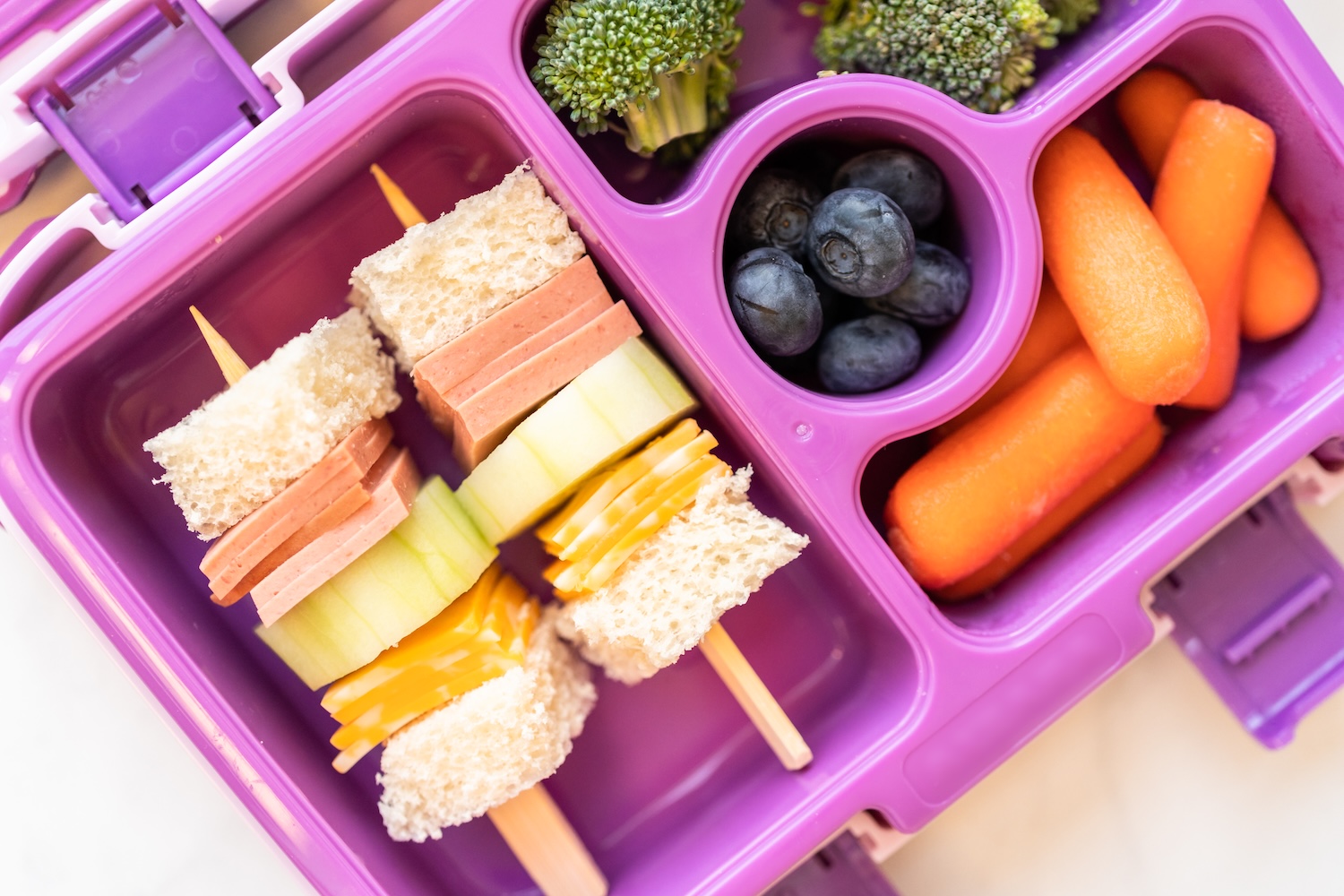
A good lunch does not need a long ingredient list. A sandwich or wrap, whole fruit, cheese or yogurt, and water can cover a lot of ground. You can also rotate in hard-boiled eggs, cucumbers, carrots, hummus, nuts if the school allows them, or leftovers your child already likes.
Variety helps because kids get tired of the same lunch pretty quickly. One day might be turkey and cheese with apple slices, while another could be pasta salad with vegetables and yogurt. Then another day might be a quesadilla, berries, and water.
If mornings are rushed, though, there is nothing wrong with relying on a few combinations you know work. School lunches do not need to be complicated to be tooth-friendly. A handful of reliable foods can carry you through most of the week.
What to Skip or Keep Occasional
Sticky candy, fruit snacks, sour gummies, and chewy bars are some of the bigger troublemakers for teeth because they combine sugar with a texture that clings. Sour candy adds even more acid into the mix. When those foods show up often, the enamel gets exposed for longer periods.
Sugary drinks can be just as rough on teeth, especially when they are sipped slowly. Juice boxes, sweet tea, sports drinks, and soda bring sugar and often acid into the mouth. If your child takes little sips over an hour or two, that exposure keeps getting extended.
These foods do not have to become forbidden. However, they are better as occasional choices instead of everyday lunchbox staples. And when your child does have one, eating or drinking it with the meal is usually better than stretching it through the afternoon.
Water Is Still the Best Everyday Drink
Water is the easiest everyday choice because it hydrates without adding sugar or acid. It also helps rinse away loose food after lunch, which is useful when brushing at school is not realistic. A refillable water bottle can make that habit easier throughout the day.
Milk can also fit well with lunch, depending on your child’s preferences and the school setup. It provides protein and calcium and is less acidic than many sweetened drinks. Flavored milk does contain added sugar, though, so that is something to keep in mind if it is an everyday choice.
Sports drinks are usually not needed for a regular school day. They can be both sugary and acidic, and sipping them throughout practice can keep the teeth exposed for a long time. For most daily activities, meanwhile, water still does the job.
Lunchbox Foods That Get Stuck Between Teeth
Some foods are more likely to wedge between teeth, especially if your child has crowding, braces, or tight contacts. Shredded meat, popcorn, dried fruit, and stringy vegetables can all get stuck in certain areas. If that keeps happening, your child may come home complaining that one spot has been bothering them all afternoon.
That does not mean those foods are bad choices across the board. Instead, it helps to notice patterns. If the same food keeps creating the same problem, swapping it for something easier to manage may save your child a few uncomfortable hours at school.
Flossing after lunch is probably not going to happen for most kids, and that is fine. The more thorough cleanup can happen at home. In the meantime, choosing foods that do not constantly wedge into trouble spots can make the day easier.
What if Your Child Cannot Brush After Lunch?
Most kids are not brushing their teeth after lunch at school, so there is no need to build the entire lunch around that expectation. Brushing well before school and again before bed is still the foundation. During the day, water and fewer sticky snacks can help bridge the gap.
If your child does have access to a toothbrush and wants to use it, that can be useful. However, after very acidic foods or drinks, rinsing with water and waiting a little before brushing is better than scrubbing the enamel right away. Acid temporarily softens the outer surface of the teeth.
Then, at home, the evening routine is where you can slow things down. That is the time to brush carefully and floss out whatever collected during the day. If your child tends to rush through brushing, working on that routine may do more for their teeth than trying to add another complicated school-day habit.
Braces and School Lunches Need a Little More Planning
If your child has braces, some foods may need to be cut up or skipped because they can damage brackets and wires. Hard candy, popcorn kernels, sticky caramels, and chewing on ice are common examples. Apples and carrots can still work, but slicing them into smaller pieces can make them easier to eat.
Sticky foods can also be harder to clean from around brackets. So a chewy snack that was manageable before braces may become a much bigger nuisance once there is more hardware around the teeth. In that case, swapping in foods that rinse away more easily can make after-school brushing a lot less frustrating.
Water becomes even more useful during orthodontic treatment. It can help clear loose food after lunch until your child gets home. Then, once they are back, brushing carefully around the brackets and cleaning between the teeth can take care of the rest.
Frequent Snacking Can Be Harder on Teeth Than One Treat
One sweet treat with lunch is not always the biggest concern. What can be tougher on the teeth is eating or sipping something sugary every hour. Each time that happens, the mouth becomes more acidic again.
Because of that, a small dessert eaten with lunch may be easier on the teeth than several sweet snacks stretched across the school day. The same goes for juice or sports drinks. Finishing them with a meal is better than sipping them slowly between classes.
This can also make food conversations with kids a little easier. Instead of turning every sweet food into a battle, you can focus more on when it is eaten. That way, there is still room for treats while cutting down on how often the teeth are exposed.
Watch for Changes in What Your Child Eats
Sometimes the lunchbox tells you something is going on before your child says much about it. If crunchy foods suddenly start coming home untouched, your child may have a loose tooth, sensitivity, sore gums, or a spot that hurts when they chew. New braces can change what feels comfortable too.
If your child starts chewing only on one side or avoids foods they used to eat without a problem, ask what changed. Tooth sensitivity, a cavity, or a sore gum area can sometimes show up first as a change in eating habits. Kids do not always describe dental pain in a clear way, so those little changes can be worth paying attention to.
The same goes for a sudden shift toward only soft foods. If that lasts more than a day or two, especially if your child mentions pain or avoids biting with one tooth, it is worth having the area checked. Sometimes a small change at lunch is the first clue that something needs attention.
School Lunches and Dental Health at Magnolia Dental in Mabank, TX
A tooth-friendly school lunch does not have to be perfect, and it definitely does not have to be boring. Whole fruit, cheese, yogurt, sandwiches, vegetables, protein, and water can all fit into a lunch your child will actually eat. Meanwhile, sticky sweets, frequent snacking, and sugary drinks are better kept occasional because they can leave sugar and acid around the teeth longer.
At Magnolia Dental in Mabank, TX, Dr. Gerard Macy, Dr. Odelia Kim, Dr. Tanner Anglin, and Dr. Ana Taboada can help you keep your family’s teeth healthy through the school year with routine exams, cleanings, and advice that fits your family’s real routine. If your child is due for a dental visit or you have noticed sensitivity, chewing changes, or another concern, call Magnolia Dental to schedule an appointment!
Categorised in: Dental Tips, Family Dental Care